Ongoing
Building Decarbonisation
Integrated Renovation Programmes and Local Heating and Cooling Plans
News


About the Partnership
"Our aim is to test and demonstrate multilevel governance approaches that integrate district and neighbourhood strategies with local heating and cooling plans, driving the decarbonisation of Europe’s building stock in line with the European directives"
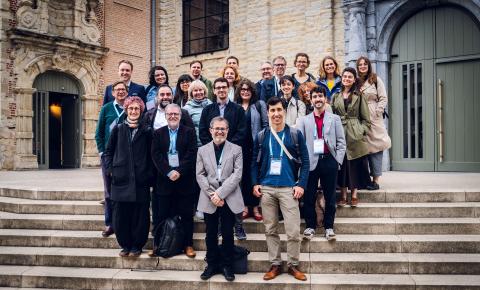
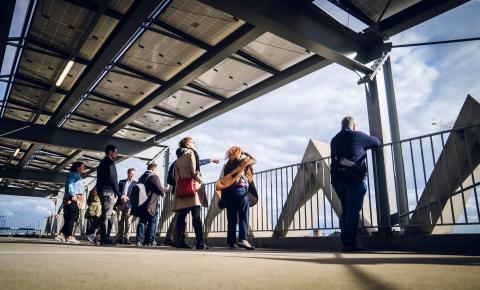
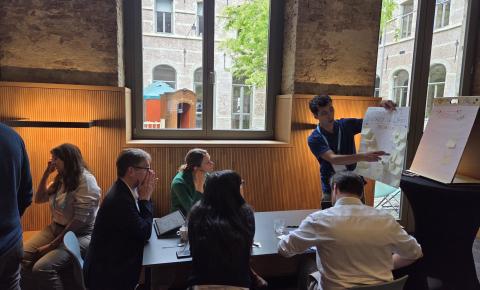
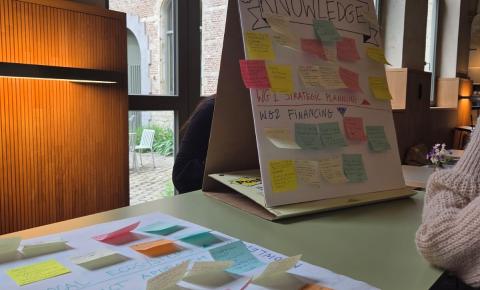
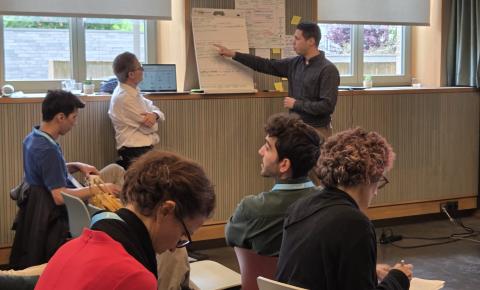
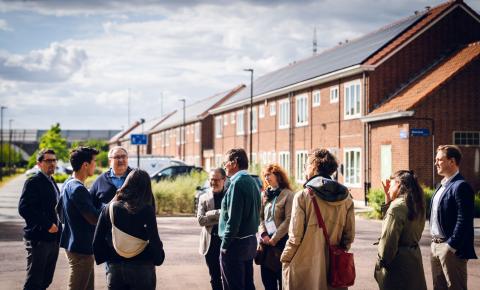
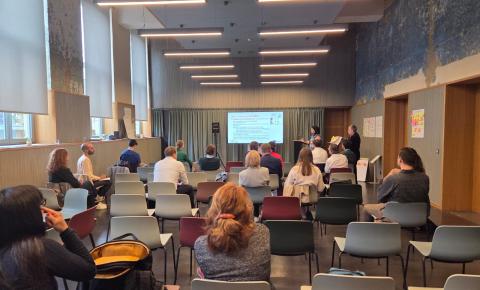
Launched in November 2024, the Urban Agenda for the EU Building Decarbonisation Partnership addresses decarbonisation of buildings through a strategic integrated approach, going beyond individual buildings by encouraging the district/neighbourhood approach and making full use of the provisions in the revised directives. Local heating and cooling plans are among the important steps towards decarbonisation of buildings. This approach could be linked with the development of district heating, the development of energy communities and energy sharing and explore the possibilities of the Electricity Market Design reform. To put these objectives in practice, it is important to develop strategies and plans at the local level.
The Partnership is composed of 26 partners representing national and regional authorities, urban authorities, European umbrella organisations, other stakeholders, and the European Commission.
Thematic Focus
From January to June 2025, the Partnership undertook an intensive collaborative process to define the thematic focus of this Orientation Paper. Building on the findings of the Ex-Ante Assessment, a series of focused sessions and working meetings, both online and in-person, enabled the identification and consolidation of key areas where coordinated urban action can generate tangible impact. As a result of this collective effort, four thematic areas were identified: Strategic Planning at Municipal Level, Financing Building Decarbonisation, Collaboration for Local Ecosystems and Implementing Projects at District/Neighbourhood Level.

The Building Decarbonisation Action Plan is composed of six complementary actions aimed at advancing integrated decarbonisation approaches in buildings at the local level. The six actions cover important topics in order to ensure a more effective implementation of building decarbonisation approached at the local level. Therefore, these Actions look at regulatory interplays and links between different plans at the local level, data and indicators on energy and buildings, funding and financing options, as well as, ensuring effective governance models for building decarbonisation at the local level.
Action 1. Mapping the regulatory interplay between the EED and EPBD
This Action aims at mapping the regulatory interplay between Local Heating and Cooling Plans and National Building Renovation Plans from a municipal perspective, identifying gaps and synergies (supported by case studies) to provide concrete recommendations as a policy brief.
Action 2. A set of indicators for Building Renovation and Cooling & Heating Plan (BREACH Plans) at the local level
This Action is intended to help local authorities to developing a common/minimum Set of Indicators for energy strategic planning at local level (H&C plans and BR plans), taking into account data availability and European policy frameworks (EED & EPBD Directives).
Action 3. Roadmap for the elaboration of Building Renovation and Cooling & Heating Plan (BREACH Plan)
Developing a Roadmap to assist local authorities in the elaboration of an integrated Local Building Renovation, Heating and Cooling Plan (LBR&HCP) at the local level, embedded within the spatial development visions.
Action 4. Funding and financing Operational Guidance for district portfolio investment
Elaborate a comprehensive operational guidance on funding/financing options for municipalities for district decarbonisation projects, including different types of funding: public grant/subsidised loan, bank financing, alternative financing like blended finance.
Action 5. Policy paper with recommendations on funding and financing for municipalities in the next MFF
Develop a Building Decarbonization Partnership Position on how to create funding & financing schemes that support both the capacities of municipalities and the implementation of integrated district decarbonization approaches in the next EU Multiannual Financial Framework (MFF) for the period 2028-2034. More specifically, this action will focus on the role of cities and the EU Cities Agenda in the future MFF. Such recommendations will build on tangible examples and experiences from municipalities and will be validated by other UAEU Thematic Partnerships.
Action 6. Governance model toolbox for local ecosystem to implement building decarbonisation
Develop a comprehensive guide on governance model options for Building Decarbonization at local level, seeking involvement of stakeholders, based on the identification of good practices and considering the diversity of realities in municipalities.
This Action aims at mapping the regulatory interplay between Local Heating and Cooling Plans and National Building Renovation Plans from a municipal perspective, identifying gaps and synergies (supported by case studies) to provide concrete recommendations as a policy brief.
This Action is intended to help local authorities to developing a common/minimum Set of Indicators for energy strategic planning at local level (H&C plans and BR plans), taking into account data availability and European policy frameworks (EED & EPBD Directives).
Developing a Roadmap to assist local authorities in the elaboration of an integrated Local Building Renovation, Heating and Cooling Plan (LBR&HCP) at the local level, embedded within the spatial development visions.
Elaborate a comprehensive operational guidance on funding/financing options for municipalities for district decarbonisation projects, including different types of funding: public grant/subsidised loan, bank financing, alternative financing like blended finance.
Develop a Building Decarbonization Partnership Position on how to create funding & financing schemes that support both the capacities of municipalities and the implementation of integrated district decarbonization approaches in the next EU Multiannual Financial Framework (MFF) for the period 2028-2034. More specifically, this action will focus on the role of cities and the EU Cities Agenda in the future MFF. Such recommendations will build on tangible examples and experiences from municipalities and will be validated by other UAEU Thematic Partnerships.
Develop a comprehensive guide on governance model options for Building Decarbonization at local level, seeking involvement of stakeholders, based on the identification of good practices and considering the diversity of realities in municipalities.
Members
By clicking on the symbol  , in the top left corner, you will be able to see the different layers of this map.
National authorities
MIVAU (Ministry of Housing and Urban Agenda) (ES)
Regions
Department of Environment & Spatial Development Flanders (BE)
South Moravian Agency for Public Innovation (CZ) - [Active until June 2026]
Catalan Land Institute (INCASÒL) (ES)
Cities (Urban Authorities)
- City of Mechelen (BE)
- City of Milan (IT)
- City of Vaasa (FI)
- City of Kladno (CZ)
- City of Bytom (PL) - [Active until May 2026]
- City of Bergisch Gladbach (DE)
- Municipality of the City of Baja County (HU)
- Cesis Municipality (LV)
- City of Getafe (ES) - [Active from September 2026]
European/ national city umbrella organisation
- Eurocities
- Council of European Municipalities and Regions - CEMR
- German Association for Housing, Urban and Spatial Development (DE)
Other stakeholders
- Green Building Council España (ES)
- Green Finance Institute España (GFI España) (ES)
- USE Efficiency Association (UniverCities) (IT)
- Hungarian Energy Efficiency Institute (HU)
European institutions
- European Commission Directorate-General for Energy (DG ENER)
- European Commission Directorate-General for Internal Market, Industry, Entrepreneurship and SMEs (DG GROW)
- European Commission Joint Research Centre (JRC)
- European Commission Directorate-General for Structural Reform Support (DG REFORM)
- European Commission Directorate-General for Regional and Urban Policy (DG REGIO)
- European Commission Directorate-General for Climate Action (DG CLIMA)
Documents
EUI - Call for City-to-City Exchanges
The call for City-to-City exchanges is open on a continous basis.
Check the details and apply to benefit of other city experiences to tackle your sustainable urban development challenges.