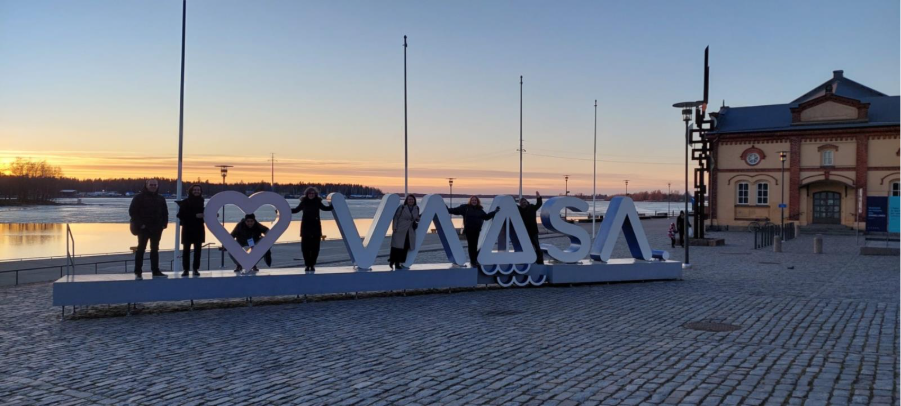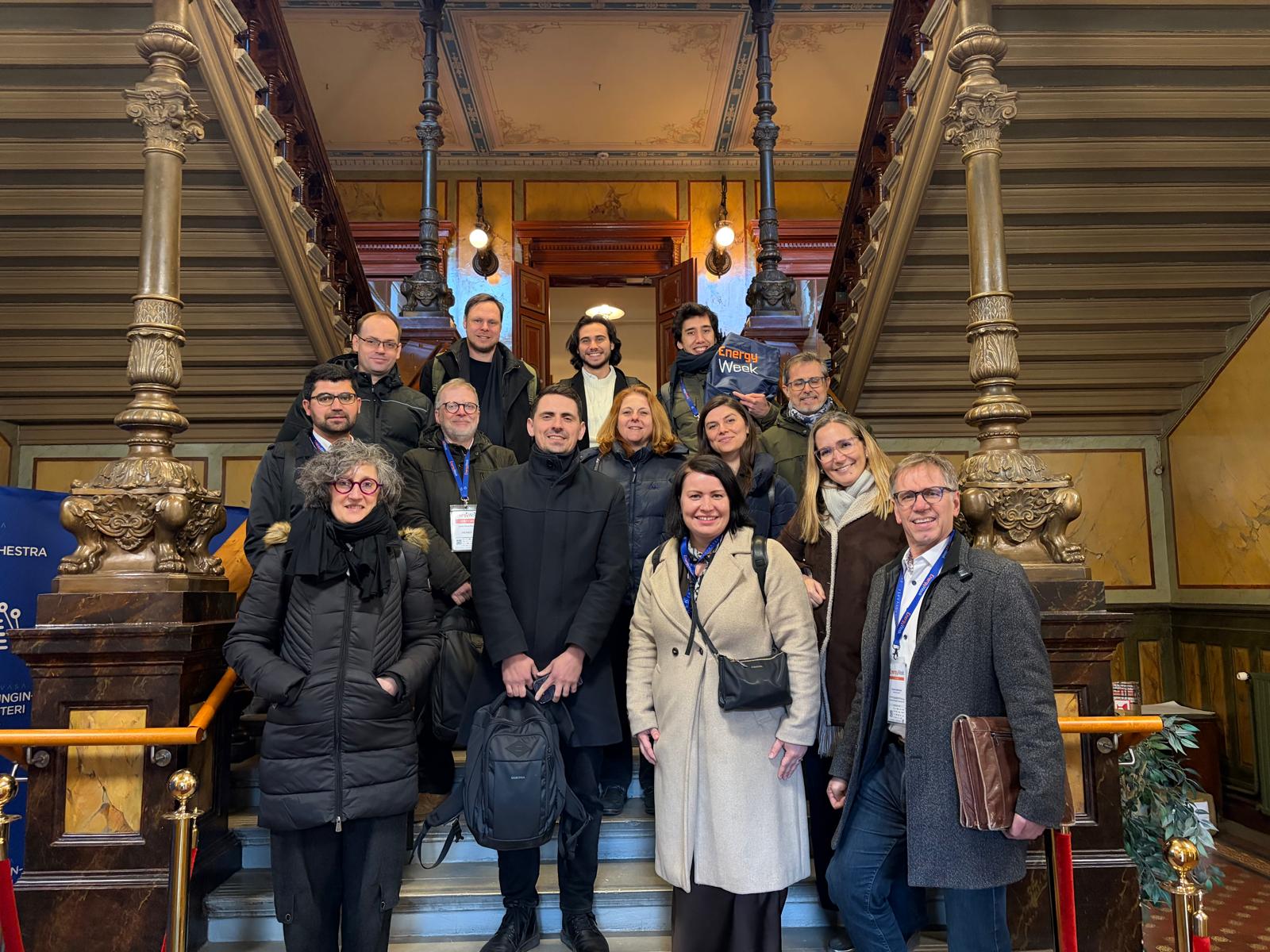
Building Decarbonisation Partnership meets in Vaasa to advance decarbonisation actions
Engaging in Energy Week: Green Leaf Award and urban innovation
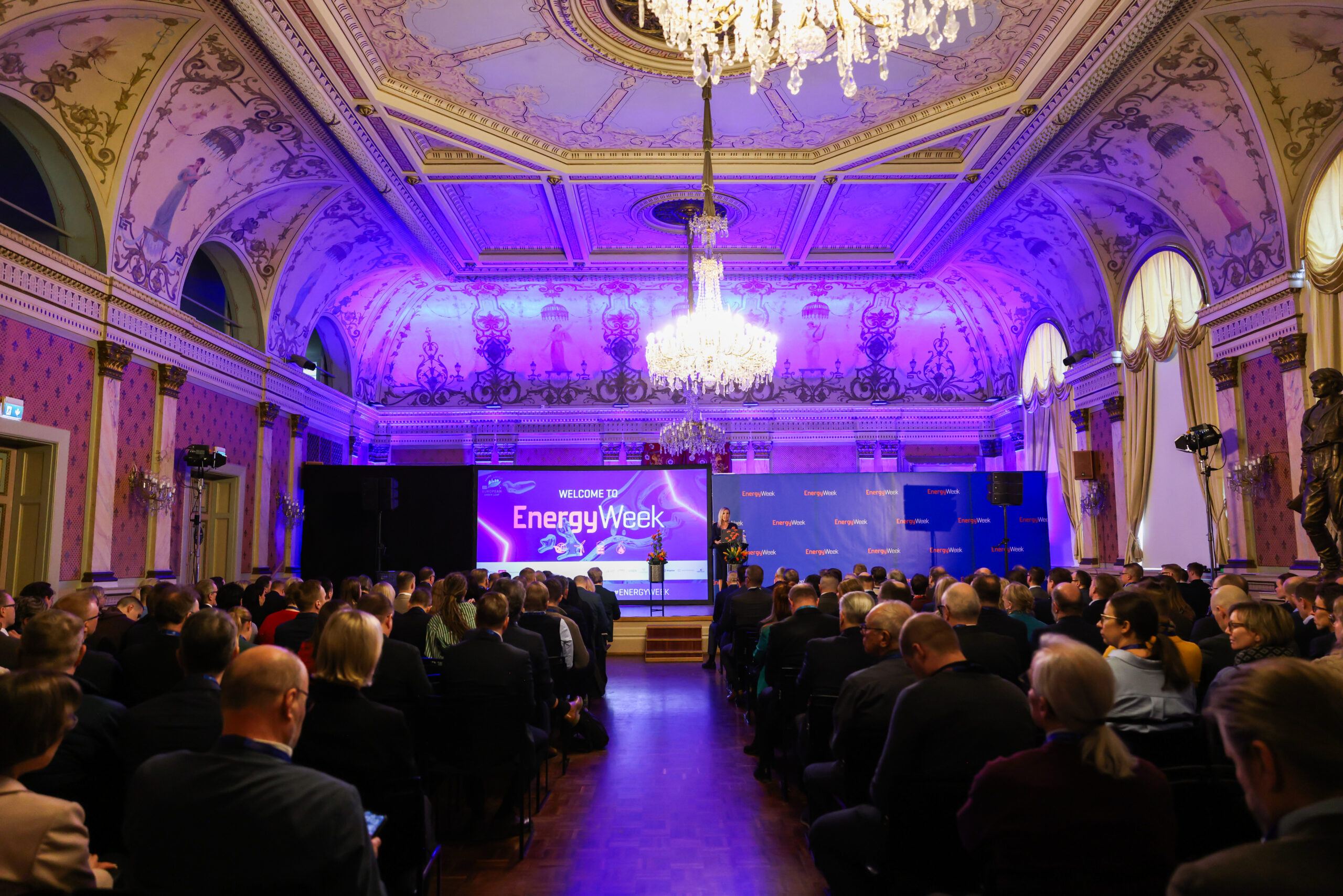
The Building Decarbonisation Partnership meeting was held as a back-to-back event with the Energy Week in Vaasa, offering Partnership members the opportunity to engage with a broader audience of policymakers, experts and practitioners.
On the morning of 19 March, members participated in the Green Leaf Award policy session, contributing to discussions on sustainable urban development and showcasing the role of cities in driving the green transition.
Ighor Van de Vyver, from the City of Mechelen, one of the Partnership's coordinators, also represented the Partnership in the session on Smart Urban Initiatives and Capabilities, highlighting how local governments are implementing innovative approaches to building decarbonisation.
Plenary sessions: Advancing strategic planning and data-driven approaches
The first day started with a presentation by Eero Ailio (DG ENER) on the current status of National Building Renovation Plans. Participants reviewed progress on National Building Renovation Plans (NBRPs), noting the EU Member States that have submitted their plans so far, with further submissions expected by the end of 2026.
A dedicated workshop on data and indicators, held by the Partnership's external expert, Ana Contreras (ACE-RTA), emphasised the importance of a multi-dimensional framework for tracking progress. Participants agreed on the need to integrate environmental, social and economic indicators, ranging from energy consumption and CO₂ emissions to energy poverty and affordability, to better align local heating and cooling plans with national renovation strategies.
From planning to implementation: progress on the Actions
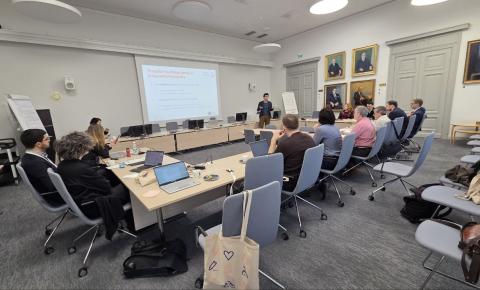
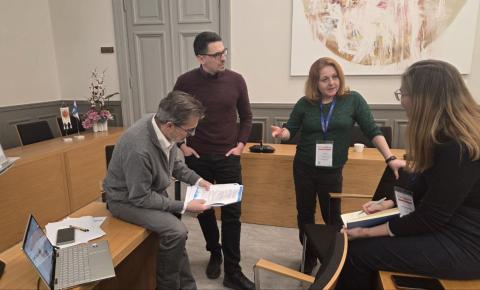
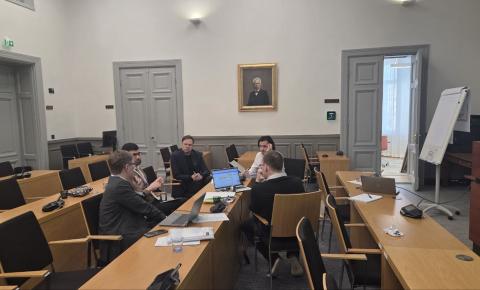
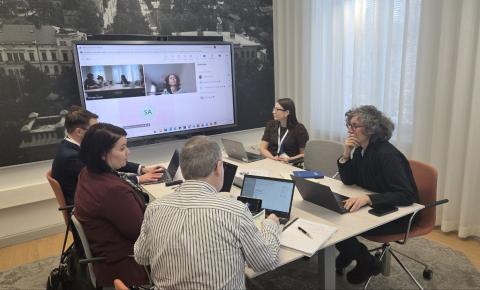
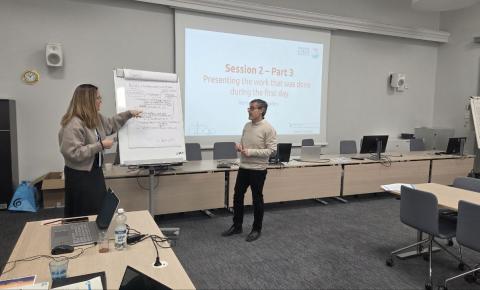
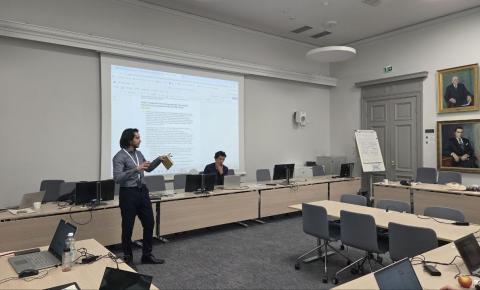
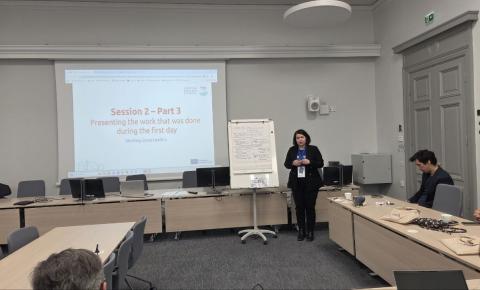
Most of the first day focused on members progressing their work on the Actions. Divided into three different working groups, the members worked on their respective Actions to start preparing their work towards the implementation of the Actions.
Working Group 1: Strategic planning at the local level focused on advancing and aligning the Partnership’s three key Actions: strengthening the links between National Building Renovation Plans and Local Heating and Cooling Plans (Action 1); developing a local indicator framework for buildings and energy (Action 2); and creating a roadmap to support municipalities in integrating heating and cooling planning with building renovation strategies (Action 3).
Working Group 2: Funding and financing building decarbonisation, focused on its two Actions which aim at creating operational guidance for district decarbonisation projects at the local level (Action 4) and working on the BD Position Paper in the next EU Multi-annual Financial Framework (MFF) (Action 5). The Working Group dedicated a lot of time to advance the BD Position paper in the next MFF, whose internal deadline is by the end of April. The Position Paper will aim at proposing funding & financing schemes that support both the capacities of municipalities and the implementation of integrated district decarbonization approaches in the next MFF for the period 2028-2034. More specifically, this action will focus on the role of cities and the EU Cities Agenda in the future MFF. Such recommendations will build on tangible examples and experiences from municipalities and will be validated by other UAEU Thematic Partnerships.
Working Group 3: Governance models for local ecosystems to implement building decarbonisation approaches (Action 6) focused on further exploiting the key results from the benchmarking exercise done at the beginning of the year and which aimed at mapping different governance models working in building decarbonisation around Europe. In order to further validate the challenges and barriers identified in this benchmarking exercise, the members will further develop an EU-wide survey targetting local authorities to understand better their experiences with the pre-identified challenges.
Strengthening collaboration and shaping future priorities
The second day focused on the Partnership’s governance, achievements and future direction. Since its launch, the Partnership has delivered key milestones, including the publication of its orientation paper, submission of a draft action plan and ongoing advocacy contributions to EU policy processes. The latest partnership position was to the open call for feedback on the EU Governance Regulation, to which the Partners submitted their feedback on the 19th of March.
The members also discussed the evolution of the Partnership’s membership, the inclusion of new cities and upcoming opportunities for collaboration and dissemination, such as the EU Week of Regions and Cities 2026 and future EUI Policy Labs.
Looking Ahead
The Vaasa meeting was an important step in moving from strategy to implementation. However, beyond focusing on content, the meeting helped to strengthen the relationships between the Partnership members not only at a professional level, but also at a more personal one. The next in-person meeting is expected to take place later in 2026, as the Partnership continues to refine its actions and expand its impact across Europe.
The Building Decarbonisation Partnership will open its Consultation Process to external stakeholders on April 16. Stay tuned to the Building Decarbonisation webpage for more updates.