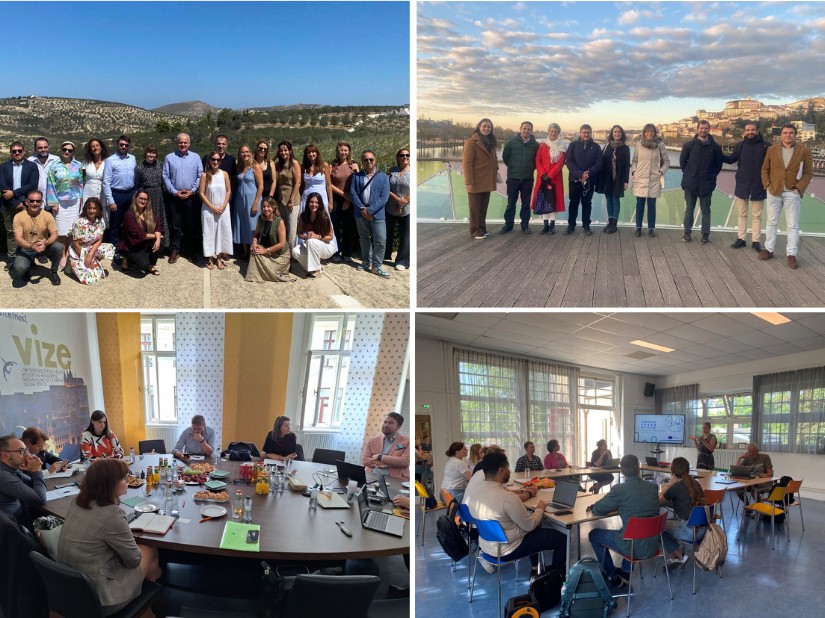

How cities learn, connect, and grow within the Urban Agenda and EUI community
Several cities involved in the Urban Agenda for the EU partnerships are demonstrating how engagement in other activities of the European Urban Initiative (EUI) can strengthen their knowledge, capacities, and long-term strategies. By combining policy co-creation, funding opportunities, capacity-building, and peer learning, these cities are generating synergies that drive sustainable urban development.
For many of them, the EUI has become a genuine community, a space to learn from peers, exchange experiences, and shape new visions for urban development. Coimbra Region, Galați and Genoa are clear examples of this dynamic.
Dive into their stories and discover the inspiring journey they’ve taken.
A growing journey: how Coimbra Region found its place in the EUI community
Coimbra Region sits at the heart of Portugal. As the country’s fourth-largest urban agglomeration, after Lisbon, Porto, and Braga, nearly 460,000 people live across its 19 municipalities.
Coimbra’s journey with the EUI began in 2018, though at the time they didn’t yet know how transformative it would become. Their first step was joining the Urban Agenda Partnership on Culture and Cultural Heritage, a natural beginning for a region whose identity is rooted in centuries of artistic and academic legacy. That experience opened the door to deeper engagement with the EUI community.
By 2022, they were ready to take on more. The Sustainable Tourism Partnership became their second point of entry, allowing them to connect regional strengths with a broader European conversation on responsible and balanced tourism. That participation laid the groundwork for something even more significant: hosting their own Peer Review.
In November 2023, cities from across Europe arrived in Coimbra for two intense days of exchange and reflection. The EUI team, alongside fellow urban practitioners, presented the full breadth of the programme, from City-to-City Exchanges to Innovative Actions and the wider knowledge platform. For many city officers, those discussions marked a turning point.
"Hosting the Peer Review in 2023 and subsequent invitations to act as a peer reinforced our commitment, providing tangible benefits in knowledge exchange, networking, and collaboration"
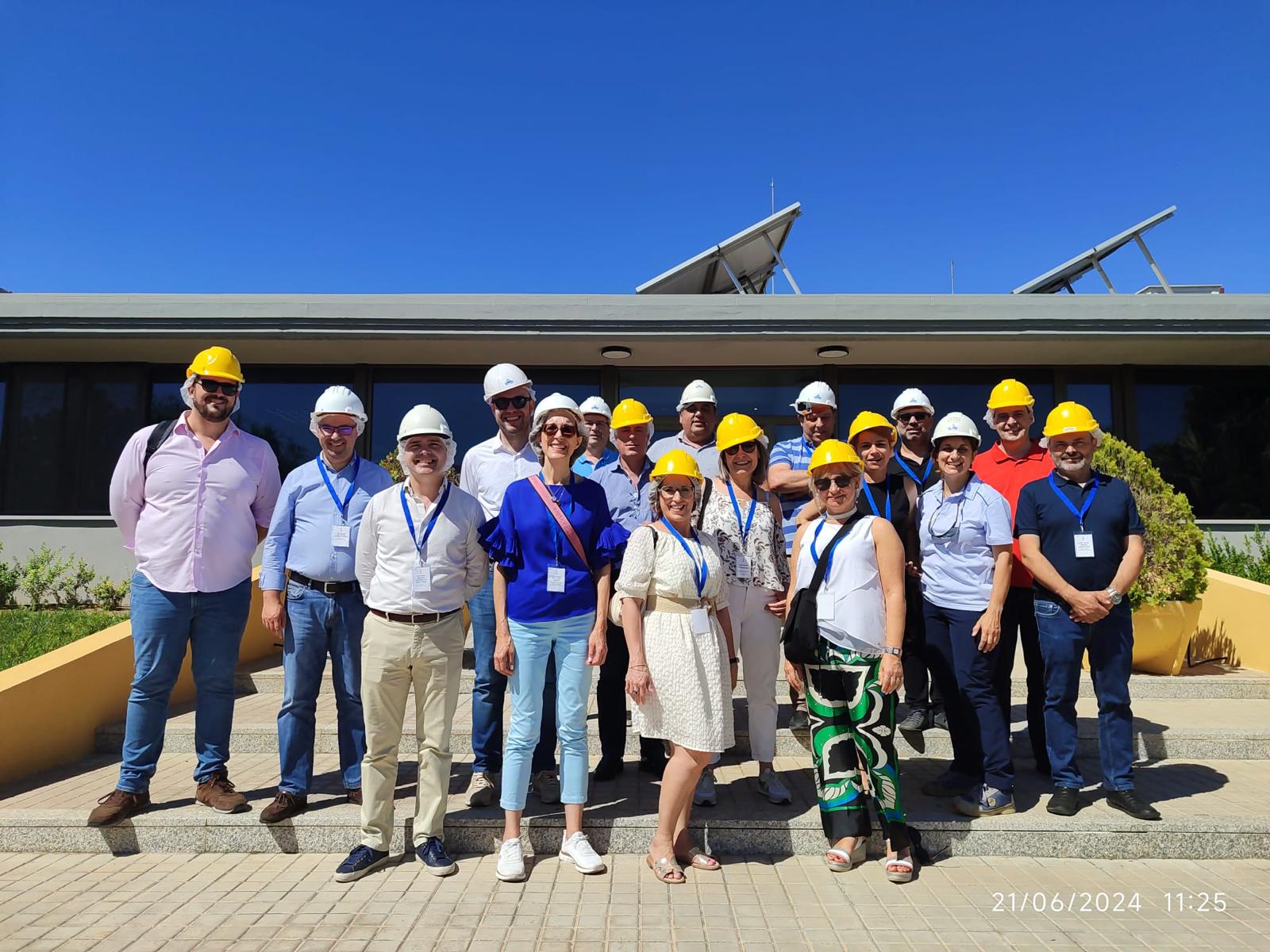
From there, each step forward revealed new opportunities and new ambitions. In 2024 and 2025, they entered the world of City-to-City Exchanges: collaborating with Murcia on waste management strategies, building academic bridges with Perugia, preparing study visits with Drama in Greece on “Meeting the demand for more Sustainable tourism: Resource efficiency, environmental protection, climate change and local economy growth”, and developing a new exchange with Sweden’s Sörmland Region. Each partnership grew from shared interests, but also from something deeper, the desire to learn together.
Meanwhile, their role in Peer Reviews multiplied. After hosting one in 2023, they were invited to join others as peers. Five have already been completed, with another on the horizon.
They also joined the COIMBRA Sustainable Tourism Large Language Models project, approved under the EUI Innovative Actions 2nd Call, as an associated urban authority. Each experience has added new layers to their understanding of sustainable urban development, governance, and community engagement.
As their confidence grew, so did their ambitions. In 2024, they took a bold step and applied to coordinate the new Urban Agenda Partnership on Water Sensitive City. When the approval arrived, it felt like a milestone, confirming how far their journey had brought them. In 2025, Coimbra Region leads Europe’s conversation on developing Water Sensitive City, an issue closely aligned with the regional environmental priorities and long-term resilience.
Galați: a city on the Danube rewrites its future through collaboration and learning
On the banks of the Danube, Galați has long been shaped by movement of people, of ideas, of goods. Home to roughly 250,000 residents, the largest city in the historical region of Western Moldavia, in eastern Romania, has always looked outward. Yet in recent years, Galați has been doing something more profound: looking forward.
The city’s European journey took a meaningful turn in October 2022. That was when Galați stepped into the Sustainable Tourism Partnership of the Urban Agenda for the EU, not just as participants, but as a co-coordinator. That was the entry point, the moment Galați understood they could help in shaping European policy, not just benefit from it. Through the partnership, they learned the complexities of multi-level governance, the art of bringing together actors with different interests, and the discipline of crafting recommendations that could echo across Europe.
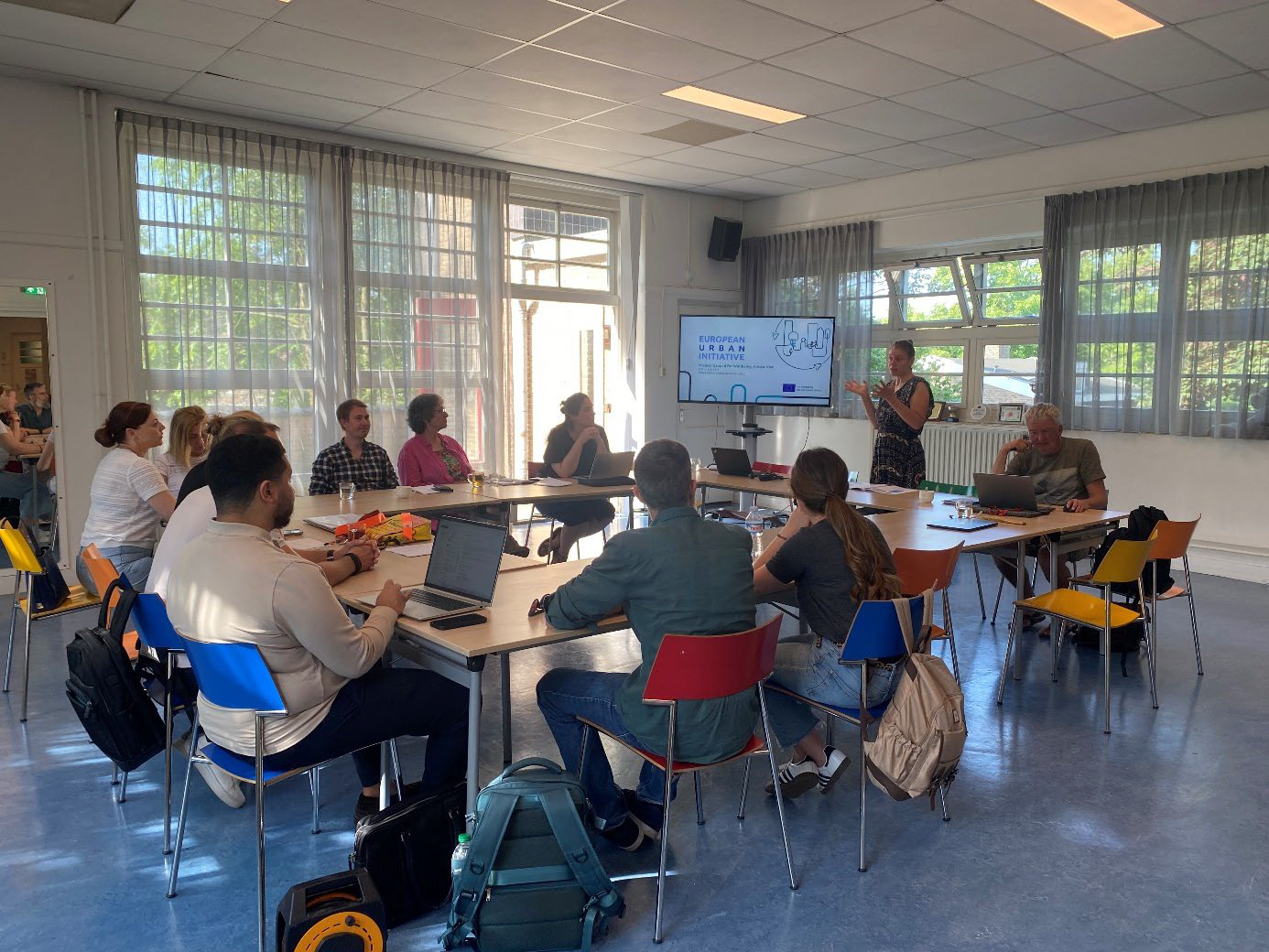
But Galați’s ambition didn’t stop there. Before joining the Sustainable Tourism Partnership, the city had already submitted proposals to two EUI Calls for Innovative Actions, one focused on circularity and carbon neutrality, another on sustainable tourism. When the second call under the ‘Greening Cities’ theme opened the door for the Ground for Wellbeing project, Galati stepped in as a Transfer Partner, collaborating with Amsterdam to reimagine how urban spaces can foster health, inclusion, and social connection.
The Development Strategy 2021–2027, with its goals around sustainable energy, smart mobility, and climate resilience, gained new direction through these European collaborations. They helped Galați think bigger, linking tourism with wellbeing, mobility with inclusion, and climate resilience with daily quality of life.
And their hunger for learning only grew. In 2024, they joined the UNESCO Global Network of Learning Cities and, with renewed motivation, actively contributed to the Interreg Europe Policy Learning Platform.
Through the Sustainable Tourism Partnership, Galați rediscovered a simple truth: tourism is not just about visitors, it’s about residents’ quality of life. And in the Ground for Wellbeing project, the city found practical tools for transforming neglected or underused spaces into vibrant places that support health and happiness. Together, these experiences helped shape a new narrative, one where tourism, wellbeing, and inclusive urban regeneration move forward hand in hand.
“The simultaneous involvement as Coordinator in the Sustainable Tourism Partnership and Transfer Partner in Ground for Wellbeing project created a powerful synergy: policy leadership complemented by practical learning and implementation. This dual role added significant value by aligning tourism development with wellbeing and inclusive urban regeneration”
Building knowledge and partnerships: Genoa’s integrated approach to the EUI
For Genoa, as for Galati, their journey with the European Urban Initiative began through its involvement in the Urban Agenda Partnership on Sustainable Tourism, stepping in the coordinator role.
Being selected felt like both a responsibility and an opportunity,: a chance to help shape a European conversation about how cities welcome visitors while protecting their identity and quality of life.
That initial experience reshaped the city officers and representatives’ perspectives. Collaborating closely with the EUI Secretariat, they gained timely updates, insights, and access to opportunities, one of which was the first call for Innovative Actions on sustainable tourism. While Genoa submitted a proposal, which was ultimately not selected, the process itself offered valuable lessons, leaving the city with new skills, fresh perspectives, and a strengthened confidence to pursue bold ideas.
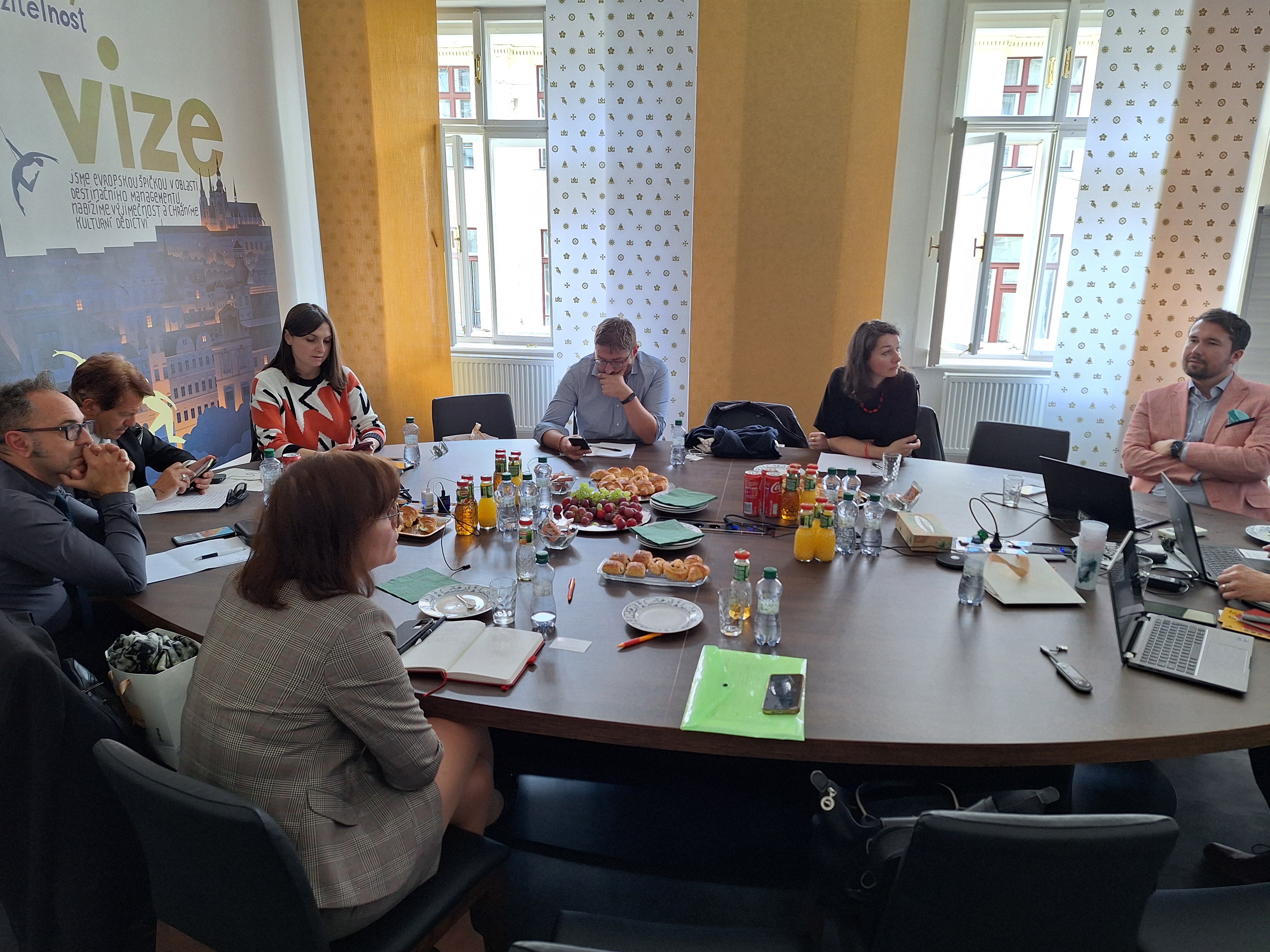
From there, their involvement deepened. Genoa joined capacity building initiatives, starting with a City-to-City exchange with Prague, and took part in four different Peer Review Sessions.
Every step of the way gave the city the chance to discover something important, that EUI isn’t just a funding programme. It’s a space where cities learn from one another, connect experiences, and grow stronger together.
There was no single defining moment, rather a series of exchanges, meetings, and shared reflections, that showed them how to approach EUI, not as a collection of separate tools but as an integrated ecosystem.
"Participating in multiple EUI activities, both simultaneously and consecutively, created significant added value for our work by allowing us to build knowledge and capacity in a structured and interconnected way. Each activity complemented the others: the peer-to-peer formats such as City-to-City and Peer Review Sessions provided concrete feedback, practical solutions, and direct exchanges with other cities facing similar challenges, while the Innovative Actions call encouraged us to translate those insights into a coherent and ambitious project vision"
And these exchanges don’t end when the meetings do. For example, after a particularly inspiring Peer Review in Romania’s Jiu Valley, Genoa decided to launch a new City-to-City Exchange with this Romanian network of towns, sharing approaches to sustainable tourism and city branding, and learning from one another in a partnership that continues to grow.
Looking back, Genoa’s journey with EUI is one of steady, meaningful progress: not just ticking boxes, but building relationships, strengthening capacity, and shaping a clearer long-term vision for Genoa’s future. It’s a reminder that cities, like people, grow best when they learn together.
Key benefits and lessons learnt
Coimbra’s journey with EUI became a driving force for deeper regional cohesion. Little by little, the 19 municipalities began working together in a more coordinated way, aligning their visions and tackling shared challenges through integrated approaches. Exposure to other European cities allowed Coimbra to bring home fresh ideas and international best practices, many of which gradually found their way into local and regional strategies. Most importantly, the experience nurtured a growing openness to experimentation, encouraging the region to test innovative, sustainable solutions inspired by the successes of its peers.
In Galați, participation in the EUI marked a shift in mindset. What began as involvement in sector-specific initiatives soon evolved into a more holistic planning approach. Tourism, for instance, stopped being treated as a stand-alone topic and instead became linked to broader goals such as public health, social inclusion, and environmental sustainability. Alongside this change, Galați embraced new participatory methods in its urban regeneration projects. Citizens were no longer simple observers but active contributors, shaping the public spaces that form the heart of their community. Furthermore, the City of Galati recognises the Urban Agenda’s unique role as an opportunity to gain the European Commission’s perspective, directly guiding its work while ensuring that cities’ voices are heard.
For Genoa, the combined engagement across various EUI activities translated into profound internal change. The city’s departments started working differently, more collaboratively, more strategically, and with a clearer sense of shared purpose. The culture of integrated planning strengthened, as teams learned to build projects together from the very beginning, inspired by the multidisciplinary approach promoted within the EUI. At the same time, regular exchanges with other European cities encouraged Genoa to rely more consistently on evidence, data, and innovation. Benchmarking, good practices, and structured dialogue with stakeholders gradually became central tools in the way new policies and projects were conceived and developed.
Each of these journeys showcase how ambition, commitment, and shared knowledge can transform cities and communities alike, proving that sustainable urban development is within reach for all.
Join the EUI community
Have these stories inspired you to become part of the EUI community? Don’t miss the upcoming opportunities!
Stay tuned for updates on the forthcoming Call for Innovative Actions and make sure to subscribe to our newsletter and follow our social media if you want to not miss out on any exciting opportunities! Make sure to also explore Portico’s valuable knowledge hub to benefit from the wealth of experience shared by cities across Europe.